
Good morning. If you’re anything like me the best comment or solution comes to you after the fact, not during the problem. You replay the scene a million times in your head and every time you realize that you missed the moment you should’ve grasped. Here’s what I’ve learned, the meetings you replay in your head are usually about the moments you didn’t intervene.
A client recently shared a story with me and I think it may resonate with you. She’d been in a meeting with one of her directs. Big decision on the table. He was making the case for an approach she didn’t agree with. She listened. She asked clarifying questions. She let him finish.
After the meeting ended, she sat at her desk and all of a sudden, once the pressure was off, she felt the right intervention land. The one question that would’ve cracked his logic open. The question she should’ve asked twenty minutes earlier.
She sent him a follow-up email. Walked through the thinking. Made the case. Got the outcome she wanted, eventually.
She told me about it the way you’d report a small win. I asked her how she’d felt during the conversation itself, not the follow-up. She paused. “I felt like I was watching it happen.” I could totally relate!
There’s a difference between intervening in real time and processing in retrospect. Both feel like leadership. They aren’t. Catching it after means the team is doing the work of patching the gap your real-time silence created. The follow-up email isn’t the conversation. It’s the cleanup.
I’ve done this myself, probably this week. There’s a moment in every difficult conversation where you can feel the right question forming. And there’s a smaller, quieter moment a beat after that, where you decide to let it pass and circle back. Both moments are real. Only one of them is leadership.
What stuck with me wasn’t the email. It was that she’s actually sharp in real time. She’s not someone who freezes. She defaults to processing because she’d rather get it right than say something wrong. The cost is that her team doesn’t see her think. They see her position, eventually, after she’s had time to refine it. And they’re starting to bring her positions instead of questions.
Nobody puts “I asked the question in the room” on a list of leadership wins. It’s also most of the game.
I don’t know what the moment was for you this week. I do know you’ve had it. The conversation where the right intervention came to you twenty minutes later, and you told yourself you’d handle it in the follow-up. Maybe you did. Maybe the follow-up worked. The question isn’t whether you fixed the outcome. The question is what your team learned about what to expect from you in real time.
If you’re in the middle of something that one conversation can’t resolve, that’s the kind of work I do with leaders one-on-one. Not advice. Pattern recognition applied over time, so the pattern doesn’t just get named, it gets rewired. Reply to this email if you want to talk about what that could look like.
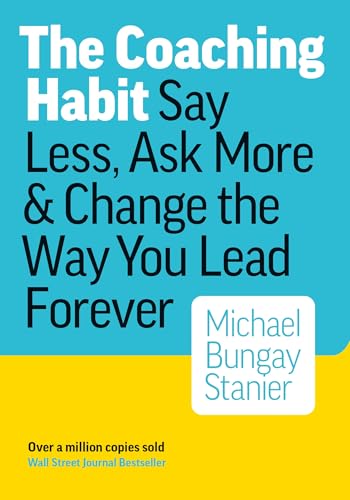
This week’s read: The Coaching Habit by Michael Bungay Stanier. This is one I recommend so often it feels like I should make a commission. I don’t, but it’s that good. It’s a short book about asking better questions in real time. Most leadership books tell you what to say. This one teaches you the discipline of saying less, more sharply, while the conversation is still moving. Find it here.
The follow-up email is a great backup. It’s a terrible substitute.