Happy Wednesday. This week’s pattern is mine.
I’m renovating a condo, which means I’ve spent the last month making decisions about things I have no business having opinions on. Tile. Grout lines. Stone.
Being a thoroughly modern person, I did my research with ChatGPT. Hours of it. And it was wonderful. It confirmed my choices, refined my choices, told me my instincts were good. It even recommended a specific marble for the bathroom. I got attached to that marble. And, let me tell you ChatGPT is an amazing designer. I type my ideas and it creates renders that I’d have to pay thousands for from a designer.
Then I brought in a designer. Real person, decades of experience. The same designer who helped me with my kitchen and bath remodel last year here in Pittsburgh. She looked at my AI-approved plan and mentioned the marble in about five seconds. “That’s discontinued. I know exactly what stone that is.” And some of what I’d been recommended, as far as she could tell, doesn’t exist at all. My heart sunk. I loved that marble!
Here’s the part I actually want to tell you about. When she confirmed the one choice I’d made completely on my own, the floor tile I already loved, I heard myself say, “Good. I needed that motivation.” Not information. Motivation. I’d already decided. I didn’t need her expertise for that one. I needed her permission.
I sat with that for a while, because it’s the same thing I watch executives do every week. You’ve already decided. You’ve been decided for months. What you’re collecting isn’t input, it’s cover. And the frictionless yes-machines around you, some of them ai, some of them on payroll, are happy to supply it.
The problem with a yes-machine isn’t that it agrees with you. It’s that it agrees with you at the same volume whether you’re right or wrong. My marble got the same enthusiastic confirmation as my tile. One of them exists.
I know, I know. The coach discovered she was human. But it rattled me a little, how good the agreement felt. How little I wanted to ask hard questions about the marble.
The expensive question isn’t “am I right?” You can always find something to tell you yes. The expensive question is “what would someone with real eyes see in five seconds?”
If something in this week’s newsletter described a pattern you’ve suspected but couldn’t name, that’s exactly what Executive Triage is built for. One conversation. One pattern named with enough precision that you can’t unknow it. 90 minutes, an eight-page brief, $3,500. cynthiacorsetti.com/executive-triage
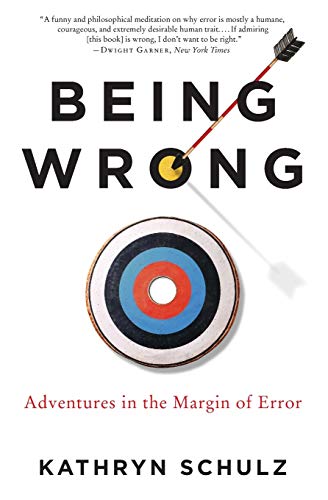
This week’s read: Being Wrong by Kathryn Schulz. Schulz wrote an entire book about the experience of being wrong, and the central finding is that it feels exactly like being right, up until the moment it doesn’t. Funnier than it has any right to be. Find it here.
The tile’s in. It’s beautiful. The marble, we’ll never know.