Good morning. This one’s been sitting with me for a couple of weeks.
There’s an employee at one of my client companies who’d been raising the same flag for years. Same process problem, same warning, over and over. Somewhere along the way, the organization developed a shorthand for her: it’s just her again.
Think about what that phrase does. It converts a signal into a personality trait. The problem stops being the problem and becomes her problem, the thing she does, background noise with a name attached. Nobody decided this in a meeting. It just calcified.
By the time the leader I work with got involved, the employee was close to quitting. Not because of the process problem. Because of the shorthand.
What turned it around wasn’t a retention package or a new role. It was three check-ins, about ten minutes each. In the third one the employee said, “I really believe that you’re listening.” Believe. Present tense. As in: this is new.
Ten minutes, three times. I know how that sounds. I run a coaching practice, I’m contractually obligated to believe in the power of conversations. But I’ve watched expensive interventions do less.
Here’s the part that got me, though. The flag she’d been raising? She was right. She’d been right for a long time. The organization didn’t lose the information because it was wrong. It lost the information because of who was carrying it.
Your company has one of these. Someone whose name has become a shorthand, whose emails get skimmed, whose flag has been flying so long it’s part of the landscape. The question isn’t whether they’re difficult. They might be. The question is what they know that you’ve trained yourself not to hear.
And if your leadership team is anything like the ones I work with, the shorthand isn’t about one person. It’s a habit the whole team has, a way of sorting people into signal and noise that hasn’t been audited in years.
If you’re noticing these dynamics playing out across your leadership team, not just in yourself, that’s where the CARE to Lead framework lives. It’s the team-level version of this work. cynthiacorsetti.com/caretolead
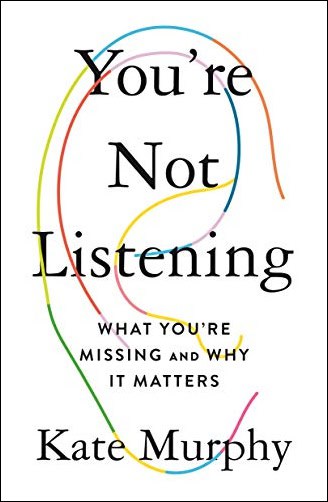
This week’s read: You’re Not Listening by Kate Murphy. Murphy is a journalist, and it shows in the best way. She interviews a CIA agent, a focus group moderator, a priest, and comes back with the same finding: most of us listen to confirm, not to learn. Chapter three will sting a little. Find it here.
She was right about the process, by the way. She usually was.