
She told them not to wait. Then made them wait.
Hi, welcome back. I’m going to be direct with you this week because I think you need to hear this one, even if it’s uncomfortable.
How many decisions are sitting in your inbox right now that someone on your team could have made without you?
A VP called me frustrated because her team wasn’t taking initiative. “I’ve told them a hundred times, don’t wait for me. Just make the call.” So I asked her to show me her approval workflow. Every customer proposal over $10K needed her sign-off. Every new hire requisition sat in her inbox for review. Her team’s weekly priorities had to be submitted to her by Monday morning for her to “align” them.
She’d told them not to wait for her. But she’d built a system that required them to wait for her.
When I pointed this out, she said what I’ve heard dozens of times: “I’m just making sure things don’t fall through the cracks.” But things were falling through the cracks. Not because her team wasn’t capable. Because everything had to pass through a single point of failure. Her.
I’ll be honest, I almost didn’t push on this one. She was having a genuinely hard quarter. Revenue was soft, two senior people had just left, and she was holding a lot together. The last thing she wanted to hear was that she was part of the problem. But that’s the job. And I’ve learned that the clients who need to hear something the most are usually the ones who least want to hear it.
What happened next surprised me. I asked her to pick one decision category and remove herself from it for two weeks. Just one. She chose the proposals under $25K. “Fine,” she said. “But if something goes sideways, it’s on you.”
Nothing went sideways. Her team made twenty-three decisions in two weeks without her. Twenty-one of them were exactly what she would have decided. The other two were different, and both were fine. When I asked her how it felt, she didn’t say “relieved” or “proud of my team.” She said, “Honestly? A little irrelevant.”
That’s the thing nobody talks about with delegation. The reason leaders hold onto decision-making isn’t usually about quality control. It’s about identity. If you’re not the person everyone needs, who are you? If the team runs fine without your sign-off, what exactly is your job? Those questions are uncomfortable. They’re also where the real growth lives.
The hardest thing for high-performing leaders to accept is that their involvement might be the problem. Not their intentions. Not their judgment. Their presence in the decision chain. And every week that system stays in place is another week your team learns not to think for themselves.
If something in that story felt uncomfortably familiar, ask yourself: what’s one decision category you could step out of this week? Not all of them. Just one. See what happens. I think you already know what you’ll find.Write engaging and informative content that will help your readers understand your message.
If you’re recognizing a pattern here that goes beyond one approval workflow, if it’s showing up in how you run meetings, how you give feedback, how you hold the reins on things you know you should let go of, that’s the kind of thing that shifts with sustained work, not a single insight. That’s what my 1:1 coaching engagements are built for. Not advice. Pattern recognition applied over time, so the operating system actually changes. Reply to this email if you want to talk about what that could look like.
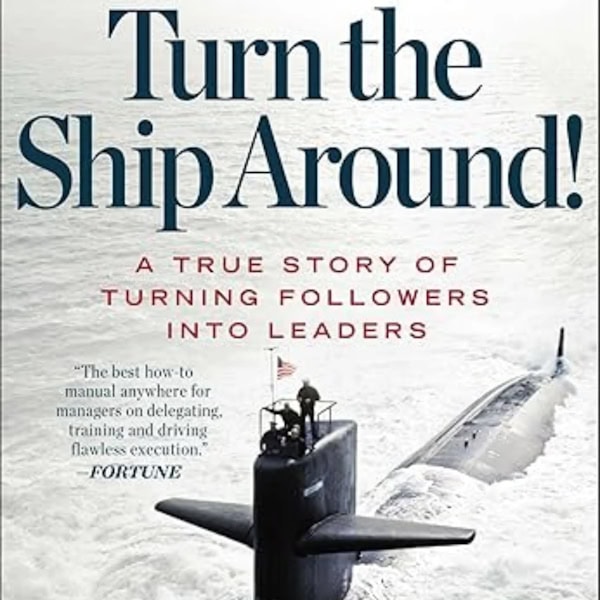
This week’s read: David Marquet’s “Turn the Ship Around.” It’s the best thing I’ve read on what happens when a leader stops being the decision maker and starts being the person who builds decision makers. He took a nuclear submarine crew from worst to first by doing exactly what this week’s story describes: removing himself from the approval chain and giving his crew the authority to act. The leadership dynamics are identical to what happens in every mid-market company where the CEO is the bottleneck they can’t see.
If your inbox is full of decisions only you can make, the first question isn’t how to decide faster. It’s why you’re the only one deciding.