A quick note before we get into it.
I’ve been publishing this newsletter for a while now, and it’s evolved into something I’m proud of but that I think can serve you better. If you’ve been reading Leadership Insights for the weekly article, book, and podcast recommendations, I want to be honest with you: that’s not what I do best.
What I do best is notice things. Patterns. The thing you’ve been doing for so long that you can’t see it anymore. That’s the work I do with clients all week, and it’s the part of this newsletter that people tell me actually sticks with them.
So starting this week, the newsletter is getting shorter and more focused. More of me, less curation. One story, one recommendation if something genuinely earns its spot that week, and a closing thought. The whole thing should take you three or four minutes, and I want every one of those minutes to be worth it.
If you loved the reading list and you’re disappointed, tell me. Hit reply. I read everything. But my bet is that the part of this newsletter that made you subscribe in the first place wasn’t the podcast recommendation. It was the part where you thought, “How does she know that’s happening in my company?”
More of that. Starting now.
Happy Q2. Before the quarter gets away from you, let me ask you something: if I put you on the spot right now, could you tell me the three things that actually matter this quarter? Not the spreadsheet version. The real answer.
A client walked into our first Q2 session last year already behind. Not behind on deliverables. Behind on clarity. She’d carried over eleven priorities from Q1, added three new ones from a board meeting, and couldn’t tell me which ones actually mattered. When I asked her what winning looked like this quarter, she pulled up a spreadsheet. Forty-seven line items. “All of it,” she said.
That’s not a strategy. That’s a to-do list dressed up in strategic language.
Here’s what I didn’t say to her in that moment, even though I wanted to: you already know this isn’t working. You knew it three weeks ago when you felt the same dread at the start of this quarter that you felt at the start of last one. Eleven priorities carried forward means eleven things that didn’t get finished, didn’t get cut, and didn’t get questioned. That’s not ambition. That’s avoidance of the conversation about what actually matters.
What I said instead was: “Pick three. Right now. Not the right three. Just three.”
She hated it. Told me she couldn’t, that they were all connected, that dropping anything would signal the wrong thing to her board. I asked her what signal she thought forty-seven line items was sending. She got quiet.
I think about this moment a lot, actually. Not because it was some dramatic breakthrough. It wasn’t. She picked three, reluctantly, and two of them were wrong and we changed them the following week. I think about it because of what it revealed about how she’d been operating. She wasn’t holding onto eleven priorities because she believed in all of them. She was holding onto them because cutting required a kind of clarity she didn’t have yet, and the list was easier than the thinking.
That pattern shows up constantly in the leaders I work with, especially at quarter transitions. The space between quarters is the most underused strategic window most leaders have. Not for more goal-setting. Not for another planning session. For the harder work of looking at what happened, being honest about what didn’t, and deciding what actually deserves your attention for the next ninety days.
I know that’s not a sexy insight. Nobody puts “I cut my priority list in half” on their LinkedIn. But I can tell you that the quarter she finally did it, her team moved faster than they had in eighteen months. Not because the priorities were brilliant. Because everyone finally knew what they were.
If you’re starting Q2 with a carry-over list that’s longer than it should be, you probably already know which things don’t belong there. You’ve probably known for weeks. The discipline isn’t in adding. It’s in sitting with the discomfort of cutting something that you told the board mattered, and being honest that it didn’t. Or that it did, but not enough.
That’s harder than building the spreadsheet. Which is exactly why most leaders build the spreadsheet instead.
If you’re staring at a Q2 plan right now and you can feel that it’s too much but you can’t see what to cut, that’s exactly the kind of pattern that’s hard to see from inside it. That’s what Executive Triage is: 90 minutes, one conversation, and an eight-page brief that names the operating pattern running underneath decisions like these. $3,500.
https://www.cynthiacorsetti.com/executive-triage
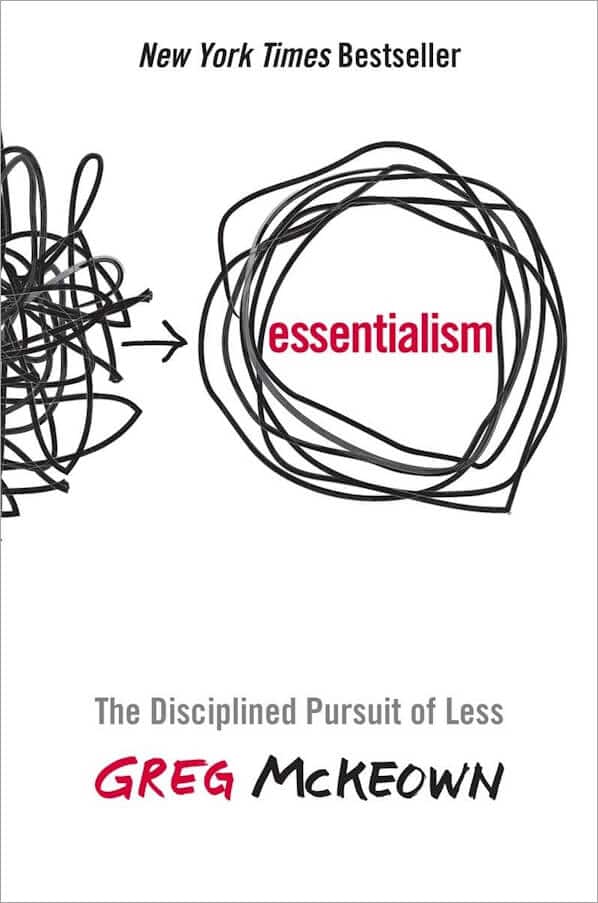
If this week’s newsletter hit a nerve, Greg McKeown’s “Essentialism: The Disciplined Pursuit of Less” is the book-length version of this argument. His core point is one I’ve seen play out in real time: the word “priority” was singular until the 1900s. It meant THE thing. Not the twelve things. Somewhere along the way, leaders started treating “priorities” as a plural noun and wonder why nothing gets their full attention. It’s a fast read and it’ll make you look at your Q2 list differently.
Q2 doesn’t need more goals. It needs fewer goals with more clarity. The discipline isn’t in adding. It’s in cutting.